

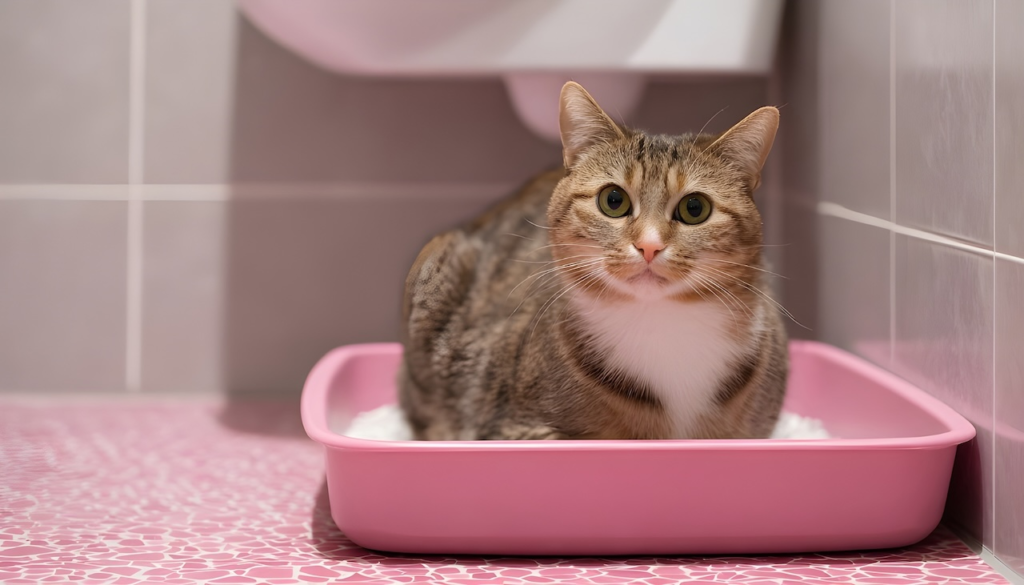
To your cat, the litter box isn’t just a box. It’s an environment that they judge by smell, texture, sound, and safety each time they use it. If you change one variable, the whole experience can change.
Sometimes litter box problems aren’t about the litter. Below, we break down where the system around it fails and how to fix it.
Most people reduce the litter box to a purchase decision. Pick a box. Fill it with litter. Put it somewhere and move on. But your cat doesn’t see it that way.
To your cat, the litter box is an environment made up of location, exposure, scent, texture, and routine. Cats don’t separate variables like we do. If any part of the setup feels unsafe, the entire experience changes.
When a cat uses the box, they are stationary, exposed, and focused. That’s not instinct being dramatic. That’s just instinct.
An exposed box. A noisy location. An inconsistent routine. None of these seem serious on their own. Together they create friction. Cats don’t troubleshoot friction. They adjust their behavior. And once avoidance starts, it’s hard to reverse.
A litter box placed in the wrong spot can undo everything else you get right.
The goal is simple: your cat should never feel exposed or trapped while using the box.
That means:
If the environment feels unsafe, the box gets avoided. Instead, place litter boxes in areas where your cat already feels at ease:
In apartments, space is tighter, so placement matters even more:
Give your cat options:
Covered boxes may look neater, but they rarely work better for your cat. Enclosed spaces can make cats feel trapped. Most covered boxes are too small to begin with, leaving little room to turn, dig, and position comfortably.
The better option is a large, open box with high sides and an easy entry. As a general rule, the box should be about 1.5 times the length of your cat. When the box is too tight or too enclosed, stress goes up. And when stress goes up, consistent use goes down.
We judge a litter box with our eyes. Cats judge it with their nose and their feet. A small amount of waste. A lingering odor. Damp litter packed down over time. Your cat notices all of these things, even if you don’t.
The litter box isn’t a place your cat passes by. It’s a place they enter, stand in, and dig through at close range. If it smells used or feels saturated, that changes the experience.
Scoop at least twice a day. Clean the area around the box regularly. Over time, even the box itself begins holding odor, especially plastic boxes that absorb smells through repeated use and scratching. If lingering odor remains after cleaning the box, replacing it may be the better option.
Your cat isn’t being dramatic. They’re reacting to buildup you may not even notice yet.
More options mean less pressure. As a general rule, one box per cat plus one extra reduces accidents, cuts down on misbehavior, and eases resource competition in multi-cat households.
Placement matters too. Cats tend to perceive boxes side by side as one large toileting area, not two separate options. In multi-cat households, a territorial cat can easily guard both. Spread boxes around the home to give every cat a viable option.
If you have multiple floors, put a box on each one.
Key Takeaway: When access is limited, cats start solving the problem themselves.
But even a well-designed setup can fail if the cat using it is under pressure elsewhere in the environment…
Stress is the leading cause of litter issues. But it doesn’t start at the box. Loud noises, scarce resources, and a lack of physical and emotional stimulation can all drive litter box problems.
We tend to look at the litter, the box, the cat. We almost never look at ourselves. But research on the root causes of feline stress includes something uncomfortable: the human-cat relationship itself can become part of the problem.
It rarely comes from anything extreme. It builds in small, everyday ways. Inconsistent routines. Interrupting rest. Picking a cat up when they’re trying to leave. Forcing interaction when they’re not seeking it. From a human perspective, these moments feel harmless. From a cat’s perspective, they make the environment less predictable and harder to control.
That tension doesn’t disappear. It has to go somewhere. And the litter box is one of the few places where your cat slows down, stays in one spot, and feels exposed. That’s where pressure tends to surface.
In some cats, stress doesn’t just affect behavior. It can contribute to painful urinary conditions like feline idiopathic cystitis (FIC), a form of feline lower urinary tract disease (FLUTD). When urination becomes uncomfortable, cats can begin associating the litter box with pain, leading to hesitation, avoidance, or accidents outside the box.
What looks like refusal is often hesitation. What looks like bad behavior is often a response to pressure the cat can’t resolve any other way. When that response is misread, people try to fix the wrong thing.
Any sudden change in litter box behavior should be taken seriously, especially straining, frequent trips to the box, vocalizing, or complete avoidance. Medical issues and stress-related urinary conditions can look behavioral at first. If your cat stops using the litter box or their behavior changes abruptly, a veterinary evaluation should be the first step.
Weight and particle size affect how litter behaves outside the box. Lightweight litters are often easier to carry and pour, but smaller, lighter particles tend to track farther and can cling to paws and fur more easily, especially in dry environments where static builds up.
Heavier litters and larger particle sizes generally stay closer to the box, though they can be harder to lift and handle. The goal isn’t perfection. It’s finding a setup your cat uses consistently and your household can maintain comfortably.
Texture, particle size, and scent all matter as well. But this is where most people get it backwards. Most litters are built to solve a human problem: smell. That often creates a new problem for the cat.
Cats rely on scent to interpret their environment. When the litter is heavily fragranced or chemically altered, it stops feeling neutral. It becomes something they have to process instead of ignore. The goal isn’t to impress your nose. It’s to remove friction from theirs.
In some cases, cats struggling with box avoidance may respond better to litters or additives formulated with alternative scent profiles intended to encourage investigation and use. These approaches work differently from heavily fragranced litters, which can overwhelm a cat’s sensitive sense of smell.
Packaging matters too. Larger litter bags or boxes can reduce cost per pound, but smaller sizes may be easier to lift, pour, and store consistently. Convenience affects routine, and routine affects consistency. The best setup is often the one you can realistically maintain every day.
When the litter disappears into the background, the system starts to work the way it should.
That’s it. No hesitation. No avoidance. No stress. It happens when the environment, the setup, and the routine align with how your cat experiences the world.
You don’t need to overhaul everything overnight. Start with what you can see. Location. The box itself. How your home feels from your cat’s perspective. Then build from there.
Most litter box problems aren’t random. They’re responses to friction somewhere in the system. And once you understand the system, those responses become predictable. You don’t need to train your cat to use the box. All you need to do is remove the reasons they wouldn’t.
Research referenced in this article includes studies on feline stress physiology, feline idiopathic cystitis (FIC), and environmental contributors to litter box behavior in domestic cats.