The Three Moments Indoor Cats Are Most Likely to Slip Outside
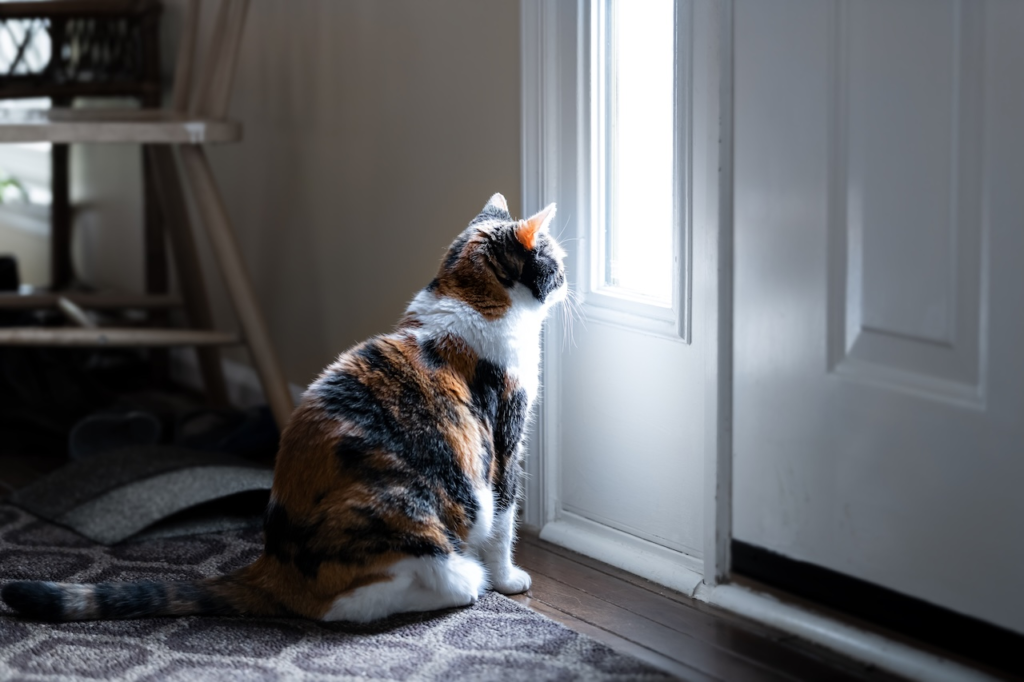
July is Lost Pet Prevention Month, making it a good time to review the situations that put indoor cats at the greatest risk of accidental escapes.
Most indoor cats are perfectly content at home. While some people interpret an escape attempt as a desire to roam, many indoor cats slip outside because an unusual situation creates an opportunity.
Holiday gatherings, Fourth of July fireworks, and routine disruptions can all increase the likelihood of an accidental escape. Learn what puts indoor cats at risk and what you can do to help keep them safe.
Table of Contents
1. Holiday Gatherings and Houseguests
During large holiday gatherings, it’s a lot of information for your cat to process. Each party attendee carries a distinct scent signature that your cat picks up on. Some cats are more open to new faces and new smells than others.
People coming and going, movement occurring in less predictable ways, and quiet areas suddenly becoming high-traffic spaces all create changes your cat notices.
When the environment changes, your cat may decide to investigate. Your cat isn’t necessarily trying to leave home. Instead, the circumstances create a moment where curiosity, caution, or simple opportunity leads them toward an open door.
2. Fireworks and Sudden Loud Noises
During holidays like the Fourth of July, fireworks can activate your cat’s instinct to seek safety.
Of course, not all cats respond to loud noises the same way. Some may retreat to a favorite hiding place, while others become visibly distressed.
Common reactions among cats include:
Hiding or retreating to confined spaces
Dilated pupils and pinned ears
Crouching low to the ground
Pacing, restlessness, or excessive vocalization
Trembling or rapid breathing
Excessive grooming
Changes in litter box habits
Attempts to flee or escape
Veterinary Insight:
Cats respond to both environmental stress and physical discomfort. Loud noises, changes to the home, and pain from underlying health conditions—such as dental disease, arthritis, or other sources of chronic discomfort—can all contribute to a cat’s overall stress level.
Stress affects more than behavior. In susceptible cats, it is a recognized trigger for feline idiopathic cystitis (FIC), a painful bladder condition that can contribute to litter box avoidance, straining to urinate, frequent trips to the litter box, and other changes in urinary behavior. Because cats instinctively hide pain, regular veterinary care plays an important role in supporting both their physical health and emotional well-being.
3. Moving, Travel, and Routine Disruptions
Your cat spends each day moving through a familiar routine:
Hunt → Catch → Eat → Groom → Sleep.
While cats are adaptable, significant disruptions to their environment can create stress and uncertainty.
Moving, travel, contractors, deliveries, house sitters, and other changes can increase the likelihood of an accidental escape. Doors may be left open longer than usual, unfamiliar people may enter the home, and normal routines may be interrupted.
Key Takeaway: Cats thrive on predictability. When routines change, opportunities for accidental escapes often increase as well.
Helping Your Cat Feel Secure
You can take several proactive measures to help your cat feel secure when routines change or stressful situations arise.
Create Safe Spaces
If your cat has a tendency to hide during uncertain circumstances, let them do so. Provide multiple hideaway options in quiet, low-traffic areas of your home. Comfortable bedding, blankets, and familiar scents can help your cat feel secure.
Noise Reduction
If there’s a lot of noise outside, consider playing soothing music, white noise, or cat-friendly programming to help mask sudden sounds. Many cats benefit from a calmer auditory environment during fireworks and other loud events.
Calming Aids
Pheromone diffusers or calming collars may help some cats feel more relaxed. Catnip may help some cats relax, though others become more active and excited when exposed to it.
Remain Calm and Predictable
Cats are highly observant of the people around them. During stressful situations, move calmly and maintain as much of your normal routine as possible.
Speaking in a quiet, reassuring voice and maintaining predictable interactions can help your cat feel more secure when their environment changes.
Expanding Your Cat's World
Many cats enjoy watching birds, feeling a breeze, and exploring new sights, sounds, and smells. If you’d like to expand your cat’s world, choose experiences that prioritize their safety.
Rather than allowing your cat to roam freely outdoors, consider supervised alternatives such as a secure cat stroller, an enclosed catio, or another protected outdoor space. These options provide environmental enrichment while reducing many of the risks associated with free roaming.
Even if your cat is comfortable outdoors, avoid these activities during holidays with fireworks or other loud celebrations. Sudden noises can trigger a cat’s instinct to flee, making it difficult (or even impossible) to prevent an escape.
If your cat enjoys supervised outdoor experiences, remember that they may begin to associate the door with those adventures. Some cats become more likely to wait by the door or attempt to dash through an open doorway, making consistent door safety even more important.
Why Identification Matters for Indoor Cats
One thing you can do today to protect your cat is to provide them with a collar and visible identification.
Many people assume indoor cats don’t need collars because they never go outside. But if an indoor cat does find itself outdoors, identification can help neighbors recognize that the cat belongs to someone and may need help getting home.
Microchips are important, but they aren’t visible. A collar and identification tag provide an additional layer of protection.
A Layered Approach to Safety
Keep microchip information current
Use a collar with identification
Check doors and window screens
Create a quiet room during fireworks
Have recent photos of your cat available
Keep Orange Inside This Lost Pet Prevention Month
Lost Pet Prevention Month serves as a reminder that even indoor cats can find themselves outside under unexpected circumstances.
As part of the Orange Inside initiative, select specially marked Dr. Elsey’s litter bags include an orange collar designed to help identify indoor cats if they accidentally get outside. Look for the Orange Inside callout on participating packages.
An orange collar with current contact information is a simple way to help others recognize that your indoor cat has a home and family waiting for them.
Most indoor cats don’t go looking for trouble. They simply encounter unusual situations that create unexpected opportunities. By reducing risk factors and ensuring your cat has visible identification, you can help make sure an accidental escape doesn’t become a permanent separation.
Frequently Asked Questions
Why do indoor cats try to get outside?
Indoor cats do not always go outside because they want to roam. Many escape attempts occur when an unusual situation creates an opportunity. Open doors, visitors, loud noises, and routine disruptions can all increase the likelihood of an indoor cat slipping outside.
Are fireworks stressful for cats?
Yes. Fireworks produce loud, unpredictable sounds that can trigger a cat’s instinct to seek safety. Some cats hide, while others may attempt to flee from what they perceive as a threat.
Can indoor cats get lost?
Yes. Indoor cats can become disoriented if they unexpectedly find themselves outside. Because they are unfamiliar with the outdoors, they often stay close to home and may hide in nearby spaces such as under decks, porches, or shrubs.
Should indoor cats wear collars?
Many cat parents choose to use collars with identification tags as an additional layer of protection. If an indoor cat accidentally gets outside, visible identification can help neighbors recognize that the cat belongs to someone and may need assistance getting home.
Is a microchip enough to identify my cat?
Microchips are an important tool for pet recovery, but they are not visible. A collar with current contact information provides immediate identification while a microchip offers permanent identification if the cat is found and scanned.
How can I help my cat during fireworks?
Provide a quiet room, close windows and doors, draw curtains or blinds, and allow your cat access to preferred hiding spaces. Some cats may also benefit from calming aids recommended by their veterinarian.
What should I do if my indoor cat gets outside?
Begin searching nearby hiding spots immediately. Notify neighbors, check under porches and decks, post recent photos, and contact local shelters and veterinary clinics. Many indoor cats remain surprisingly close to home after escaping.
What color collar should an indoor cat wear?
The Orange Inside initiative encourages cat parents to use an orange collar with visible identification to help improve the chances of a safe reunion if an indoor cat accidentally gets outside. Bright, highly visible collar colors can make it easier for neighbors to recognize that a cat has a home and may need help getting back to their family.