

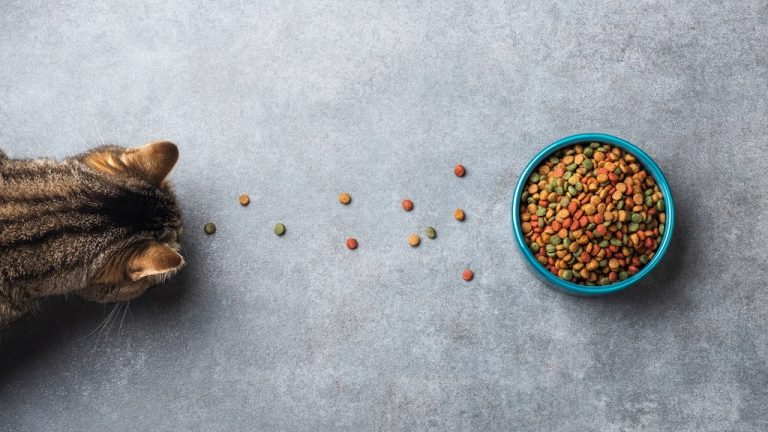
For most of history, cats did not eat cat food.
Cats hunted and scavenged. They lived alongside people as working animals, keeping rodents at bay in homes, barns, warehouses, and aboard ships on trade routes. Their diets varied by geography and circumstance, but one thing remained remarkably consistent: cats obtained most of their calories from animal prey, even while living in close proximity or even among human beings.
The modern cat food aisle is a relatively recent invention. Many of the products we recognize today emerged not from feline biology, but from the practical challenges of manufacturing, storage, transportation, and convenience. The rise of extrusion technology in the mid-20th century transformed pet food production, making shelf-stable kibble widely available and affordable.
Over time, however, researchers, veterinarians, and pet food manufacturers began asking a different question: rather than designing food around manufacturing limitations, what would happen if we started with the cat?
The history of cat food is, in many ways, the story of that shift. From hunting mice and receiving table scraps to modern formulations designed around animal protein and feline nutritional requirements, cat food has undergone a remarkable evolution.
Era | Primary Food Source |
Pre-Industrial | Hunting + scraps |
Victorian Era | Hunting + cats’ meat |
Early Commercial Era | Canned foods |
Extrusion Era | Kibble |
Modern Era | Multiple approaches |
Historically, cats were valued primarily for their ability to control rodents. Whether living on farms, aboard merchant ships, or in growing urban centers, cats occupied a practical role alongside humans. Most were expected to supplement their own diets through hunting, receiving only occasional scraps or leftovers.
As cats became increasingly valued for pest control, people paid close attention to anything that might affect hunting performance. Questions about whether working cats should be fed beyond what they caught themselves reflected an early tension that still exists today: should we feed cats according to convenience, or according to what best supports their biology?
Growing urban cat populations created a practical challenge: not every cat could rely solely on hunting to meet its nutritional needs. In Victorian England, an unusual industry emerged to support growing urban cat populations. Street vendors known as Cats’ Meat Men sold boiled horse meat that was considered unsuitable for human consumption. Pushing wooden barrows through city streets, they supplied both owned and stray cats with inexpensive animal protein.
Researchers of the period estimated that roughly 1,000 Cats’ Meat Men operated in London alone, serving a population of approximately 300,000 cats.
As cities expanded and cats increasingly moved indoors, feeding practices began to change. For the first time, large numbers of cats depended less on hunting and more on food provided directly by the people who cared for them. The stage was set for the first commercial cat foods.
As more cats moved indoors and into urban homes, feeding them became less a matter of hunting and more a matter of human responsibility. Over time, feeding cats went from an occasional thing to a daily obligation.
The earliest commercial cat foods reflected this transition. Inspired in part by the success of dog biscuits and other shelf-stable animal feeds, manufacturers began experimenting with products that could be stored, transported, and sold at scale.
The appeal was obvious. Commercial foods offered consistency, convenience, and a reliable alternative to sourcing meat directly. For manufacturers, they provided an opportunity to produce food efficiently and distribute it to growing numbers of pet-owning households.
These early products were not necessarily designed around feline biology. They were designed to solve practical problems: preservation, transportation, affordability, and convenience. For the first time, the question of what cats should eat was increasingly being answered by manufacturing processes rather than by what cats naturally hunted.
The cats’ meat trade did not disappear overnight. It was swept away by the same industrial forces that were reshaping daily life throughout the early 20th century. Industrialization of agriculture, urban changes, and early canning all played key roles in this shift, which ended up phasing out traditional cats’ meat men altogether, while rural felines continued to live on very different diets.
Victorian cats’ meat met its end due to two 20th-century shifts: the advent of the automobile (which meant the disappearance of horses) as well as the rise of commercial canning.
World War I came and went, which brought on many industrial changes and inventions and machines such as automobiles, trucks, and tractors. These vehicles quickly replaced horses in metropolitan areas, especially in major cities. As a result, the urban horse population plummeted, which dried up supplies of cheap, accessible horse meat that street vendors relied on to make a living.
In 1922, the Chappel Brothers Packing Co. (based in Illinois) launched Ken-L-Ration. This was the first mass-produced canned dog food (made from surplus wartime horse meat). This ended up being an overnight sensation. On the back of this success, Chappel launched Kit-E-Ration by 1928, introducing the world to early canned cat food.
In the 1930s the industry experienced a major boom with brands like Gaines Food introducing widely available canned cat foods. These formulas shifted the market heavily toward grocery store shelves.
Canned wet food completely outperformed and outmatched street vendors. These early iterations of canned pate that we know now were sterilized, didn’t spoil on the counter, didn’t require delivery each day, and didn’t leave grease on the floor. By the 1940s, processed cans had largely eliminated the traditional street-meat trade.
However, World War II would have something to say about this. During wartime, metal was heavily rationed, making canned pet food nearly impossible to produce.
In 1942, Conservation Order M-81 was issued by the US government, a law that strictly banned the use of tin and steel containers for non-essential products. Pet food was considered a non-essential product. This metal was saved for ammunition, military rations, and weapons.
Canned pet food vanished from grocery store shelves overnight. Production came to a grinding halt at manufacturing facilities like Ken-L-Ration and Kit-E-Ration. To adapt, cat food makers were forced to pivot.
Dry alternatives emerged, which were formulations made with mixed grains, meat meals, and industrial byproducts. These ingredients were baked into hard biscuits or ground into “meals” that were mixed with water at home.
Realizing that dry food was far cheaper to produce, ship, and store than heavy tin cans, manufacturers explored this avenue even after the war was over and Conservation Order M-81 was lifted, which laid the groundwork for modern extruded kibble in the 1950s.
Manufacturers continued combining leftover human food waste, grains, and meat meals and rendering them into dry, bagged products, a category that grew alongside resurgent canned cat food.
After the war, canned foods returned to store shelves, but dry food never disappeared. Manufacturers had discovered that dry products were easier to transport, less expensive to produce, and far more convenient for consumers than canned alternatives.
The next major breakthrough arrived in the 1950s with extrusion technology. Borrowed from the cereal industry, extrusion allowed manufacturers to cook ingredients under heat and pressure before shaping them into uniform pieces that could be stored for long periods of time. The result was the modern kibble that dominates pet food aisles today.
For pet parents, kibble solved numerous problems at once. It was shelf-stable, affordable, easy to store, and easy to feed. Adoption was rapid. By the 1960s and 1970s, dry food had become a cornerstone of the growing pet food industry.
Yet as kibble became increasingly popular, veterinarians began noticing a troubling pattern among domestic cats.
Yet as kibble became increasingly popular, a silent medical crisis emerged among indoor cats in the mid-20th century. Thousands of seemingly well-fed house cats were losing their eyesight or dying suddenly of heart failure.
By the late 1960s, veterinarians noticed a massive spike in two specific feline diseases:
In 1975, a team of researchers led by Dr. Quinton Rogers and Dr. Paul Newberne at the University of California, Davis discovered the exact cause: cats fed exclusively on commercial pet foods were suffering from severe taurine deficiency.
Taurine, an amino acid, is essential to a cat’s diet. Humans and dogs can synthesize taurine internally from other nutrients. Cats lack the specific enzymes to do that; it has to be absorbed entirely through their diet.
The extreme heat required for dry kibble extrusion processes destroyed the natural taurine present in raw meats. Understandably, people question the overall health profile of kibble, but we will get into measures taken today that ensure kibble is a viable vehicle to deliver a complete and balanced diet to cats.
Reverberations from the UC Davis discovery shocked the pet food industry. The Association of American Feed Control Officials (AAFCO) updated its nutritional guidelines by the late 1970s. Manufacturers were required to heavily fortify all cat foods with synthetic taurine. Cases of FCRD and DCM in domestic cats plummeted nearly overnight.
Cat food was separated from dog food from that point forward according to new AAFCO standards, however, cats remained misunderstood by and large. The fact that we have lived so long with cats and only discovered the fact that they are obligate carnivores with unique chemical requirements rose concern among cat advocates, concern that perhaps paved the way for the premium, science-backed feline diets that we see on the shelves today.
The taurine crisis highlighted an uncomfortable reality: despite living alongside humans for thousands of years, many aspects of feline nutrition remained poorly understood.
In the decades that followed, researchers, veterinarians, and regulatory organizations worked to establish clearer nutritional standards for cats. Today, the Association of American Feed Control Officials (AAFCO) provides nutritional profiles used throughout the pet food industry, helping ensure cat foods contain appropriate levels of protein, fat, vitamins, minerals, and essential nutrients such as taurine.
Standards continue to evolve as our understanding of feline nutrition grows. Recent efforts, including AAFCO’s Pet Food Label Modernization Project, aim to make pet food packaging easier for consumers to understand through clearer labeling and more consistent nutritional information.
The result is a pet food landscape that is far different from the one that existed just a few decades ago. Manufacturers today have access to a growing body of research on feline biology, allowing them to formulate foods with a far greater understanding of what cats need to thrive.
Extrusion transformed pet food manufacturing.
By combining ingredients into a dough-like mixture and cooking them under heat and pressure, manufacturers could create uniform pieces that were shelf-stable, affordable, and easy to produce at scale. The process helped make commercial pet food accessible to millions of households and remains the foundation of most dry pet foods today.
Like many technological breakthroughs, however, extrusion introduced new tradeoffs.
To create kibble that could be formed, expanded, and hold its shape, manufacturers needed ingredients that performed well during processing. Starches and carbohydrates became valuable not necessarily because cats required them, but because the manufacturing process did.
This distinction remains important today.
The modern kibble aisle is the product of two forces operating at the same time: feline nutritional requirements and manufacturing requirements. For decades, many formulas were heavily influenced by the realities of production, resulting in cat foods that often contained substantially more carbohydrate than the prey-based diets cats evolved eating.
As researchers learned more about feline metabolism, obesity, diabetes, nutrient selection, and the biology of obligate carnivores, a new question emerged: if manufacturing shaped the first generations of kibble, what would happen if nutrition took the lead?
As commercial pet food continued to grow, manufacturers became increasingly skilled at producing foods that were affordable, shelf-stable, and consistent from bag to bag. Many formulations relied heavily on grains and starches that performed well during processing and helped control production costs.
Over time, another trend emerged: plant-derived protein ingredients became more common in pet food formulations. From a manufacturing perspective, these ingredients could contribute protein to a recipe while supporting cost and production goals.
The challenge is that cats are not simply looking for a protein percentage on a label.
Cats are obligate carnivores. Their nutritional requirements evolved around animal prey, not plants. While manufacturing technology had made commercial feeding more convenient than ever before, questions remained about how closely many formulas reflected the diet cats evolved eating.
Researchers and veterinarians began taking a closer look at feline metabolism, carbohydrate tolerance, obesity, diabetes, and the unique nutritional requirements of obligate carnivores. As our understanding of feline nutrition improved, a new question emerged:
Could modern cat food be designed around the cat first, rather than around the manufacturing process?
As questions about feline nutrition grew, cat parents began exploring alternatives to traditional kibble. Some turned to raw feeding, attempting to recreate the prey-based diets cats evolved eating. Others adopted fresh-cooked or freeze-dried foods designed to provide less-processed nutrition while addressing concerns about safety and nutritional completeness.
Approach | What Supporters Value | Common Concerns |
Raw Diets | Mimic a prey-based diet, minimal processing, high moisture | Nutritional balance, food safety, bacterial contamination |
Fresh-Cooked Diets | Whole-food ingredients, controlled preparation, high palatability | Cost, storage requirements, nutritional consistency |
Traditional Kibble | Convenience, affordability, shelf stability | Often relies on higher levels of starch and plant ingredients |
Modern High-Protein Kibble | Convenience combined with higher animal-protein content and lower carbohydrates | Still a processed food, formulation quality varies significantly |
While these approaches differ substantially, they share a common goal: bringing feline nutrition closer to the biology of an obligate carnivore. In many ways, the modern nutrition conversation is less about choosing a specific format and more about deciding which compromises make the most sense for a particular cat and household.
This shift in thinking has influenced dry food manufacturers as well. Rather than asking how kibble can be produced most efficiently, some companies have begun asking whether kibble itself can be reformulated around the nutritional profile of a carnivore.
One approach has been to revisit a simple question: what would happen if a dry food started with the nutritional profile of a cat’s natural diet rather than the limitations of traditional kibble manufacturing?
That question helped inspire products like Dr. Elsey’s cleanprotein™.
Rather than using carbohydrates and plant proteins as the foundation of the formula, cleanprotein was developed around high levels of animal-based protein and exceptionally low carbohydrate content. The goal was not simply to create another kibble. The goal was to create a dry food that more closely reflects how cats are designed to eat.
In many ways, the history of cat food has come full circle.
Cats began by eating prey. Commercial pet food introduced unprecedented convenience and consistency. Today, advances in nutritional science allow manufacturers to ask a different question than the industry asked decades ago: not simply how to feed cats efficiently, but how to feed them according to their biology.
The most important change in modern feline nutrition may not be a new ingredient or manufacturing process. It may be a shift in perspective.
Instead of asking what works best for the factory, more manufacturers are beginning to ask what works best for the cat. Cats are obligate carnivores, and modern nutrition should begin with that reality.
Many traditional dry cat foods contain carbohydrates because starch helps bind ingredients together and gives kibble its shape during extrusion. Cats have no established nutritional requirement for carbohydrates, so their presence is often related to formulation and manufacturing rather than a biological need.
Cats evolved to obtain essential nutrients from animal-based foods. Their bodies have specific requirements for nutrients such as taurine, arachidonic acid and preformed vitamin A that reflect this carnivorous biology. A cat food should be formulated with these species-specific nutritional needs in mind.
No. Removing grains does not necessarily make a food low in carbohydrates. Grain-free foods may use potatoes, peas, lentils or other carbohydrate-containing ingredients in place of grains. Looking at the overall formulation provides more useful information than a “grain-free” claim alone.
Yes, cats can digest and utilize properly processed carbohydrates, but the ability to digest a nutrient is different from having a nutritional requirement for it. Cats have no established dietary requirement for carbohydrates and evolved to rely primarily on protein and fat for nutrition.
Yes. Although conventional kibble often relies on starch to help hold its shape, alternative formulation methods can reduce that dependence. Dr. Elsey’s cleanprotein™ uses gelatin as a binding agent, allowing the food to deliver high levels of animal-based protein while keeping carbohydrates low.
Taurine is an essential nutrient for cats because their bodies cannot produce enough of it to meet their needs. Deficiency can lead to serious health problems, including heart and vision problems. Modern complete and balanced cat foods are formulated to provide adequate taurine as part of a cat’s daily nutrition.