

Stress-related illness in cats rarely appears suddenly. It often begins with subtle behavioral changes that are easy to overlook. Most cats signal stress long before it affects their health.
When those signals go unnoticed, the body continues responding to stress behind the scenes. Over time, chronic stress can influence digestion, immune balance, and bladder health.
Cats do communicate this information before problems reach that point. The challenge is learning to recognize those signals while they’re still subtle. Read on to learn more about how to see those signals.
From trust to fear, cats express themselves through a complex, full-body system that conveys emotion – body language.
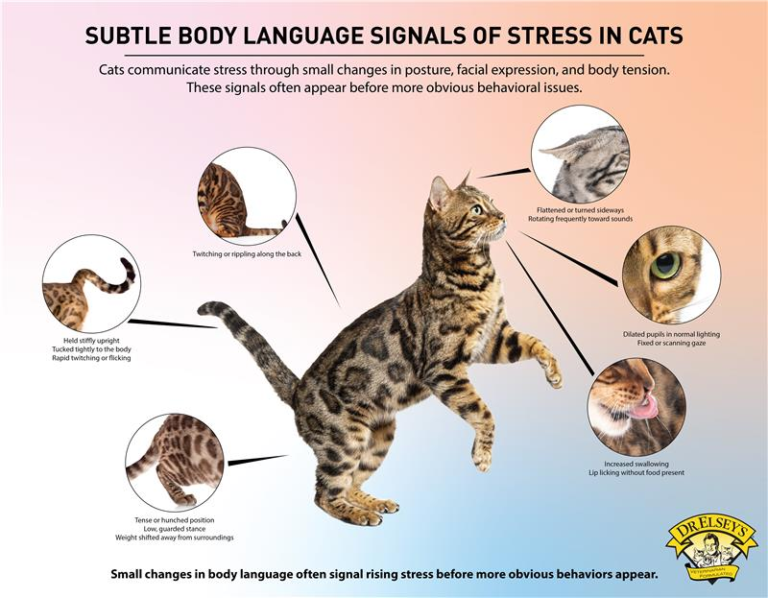
Pay attention to changes involving the tail, ears, eyes, posture, and overall tension in the body. Small shifts in these areas can signal that a cat is becoming uncomfortable or overstimulated.
Common stress-related body language changes in cats include:
Cats groom themselves using their tongue, teeth, and claws, and grooming is a major part of normal feline behavior. In fact, cats may spend 30–50% of their waking hours grooming.
But grooming can also function as a coping behavior. When cats experience stress or internal conflict, they may engage in displacement behaviors – actions like grooming that release nervous energy when a cat feels conflicted or overwhelmed. Stress-related overgrooming is one way cats attempt to regulate anxiety.
Because grooming is such a normal and frequent behavior, identifying overgrooming can sometimes be difficult.
Signs of feline overgrooming may include:
Watch for hair that appears clipped or uneven rather than completely missing, as well as hot spots – raw, inflamed areas caused by repeated licking.
Behavioral clues may include increased time spent grooming, compulsive grooming, or grooming that interrupts other activities such as eating, playing, or resting. A cat may suddenly pause mid-activity to groom, then resume as if nothing happened.
Additional signs may include more frequent hairballs or irritability that shows up as hiding, avoidance, or aggression.
The litter box is one of the clearest behavioral windows into a cat’s overall well-being. Stress signals often appear here before more obvious problems develop, making it an important place to pay close attention.
Most cat parents can recognize litter box avoidance, but litter box hesitation is often more subtle and nuanced.
Examples of litter box hesitation include:
Litter box hesitation can occur when a cat experiences discomfort or bladder irritation, environmental stress, scent sensitivity, or concerns about litter box type or location (perceived vulnerability). These behaviors are not misbehavior and should not be interpreted that way. The cat is evaluating the environment, not acting out.
Persistent stress surrounding the litter box can be associated with stress-related urinary inflammation (feline idiopathic cystitis, or FIC), increased pain sensitivity, or anxiety around elimination.
Key Takeaway: Cats rarely jump straight from normal behavior to complete litter box avoidance. Hesitation often comes first.
Since cats evolved as both predator and prey, they are observers by nature. Stress can push a cat’s vigilance into overdrive. As stress levels rise, that natural attentiveness transforms into hypervigilance.
Signs of hypervigilance include:
Environmental scanning is worth noting here. Cats naturally survey their surroundings by shifting their gaze, rotating their ears toward sounds, and briefly pausing activities to check the environment.
When stress levels are elevated, this scanning behavior can become constant, making it difficult for a cat to relax or settle down. Hypervigilance occurs when the sympathetic nervous system remains activated, keeping the brain in a persistent state of threat monitoring.
Common household triggers of hypervigilance include:
Chronic hypervigilance prevents recovery and relaxation, which can result in increased anxiety, disrupted sleep patterns, and contribute to digestive or urinary stress responses.
A cat that stays in a state of constant alertness may also begin to show changes in appetite.
Just as changes at the litter box can provide insight into a cat’s well-being, appetite can as well. Appetite is closely tied to both the nervous system and the digestive system, which means stress can disrupt normal eating patterns.
Observable changes in appetite may include:
When the brain perceives stress, the body shifts resources toward survival functions rather than digestion. As a result, digestive activity slows, and normal hunger signals can become disrupted.
Appetite changes often appear alongside other stress signals. For example, a hypervigilant cat or a cat experiencing environmental tension may show less interest in food. Persistent appetite changes can contribute to weight loss, digestive upset, or other health concerns. In some cats, stress may also lead to increased consumption or overeating.
Changes in appetite are often accompanied by shifts in social behavior.
It might seem like stress always results in avoidance, but that would be an overgeneralization. Some cats withdraw when stressed, while others become unusually clingy and seek increased contact.
Observable social signs of stress include:
Cats regulate stress in different ways. Some cope by reducing stimulation and distancing themselves, while others seek reassurance through proximity or attention.
Sudden changes in social behavior are worth paying attention to. A normally social cat hiding more often or a normally independent cat suddenly becoming clingy can both signal stress.
Stress can also heighten a cat’s sensitivity to scent and environmental cues.
Cats experience and negotiate with their environment largely through scent. When stress levels rise, their sensitivity to smells and environmental cues will often increase.
Air sampling is one behavior that can be more noticeable during times of stress. Cats may pause, lift their head, and sniff the air repeatedly while scanning their surroundings.
Observable scent-related stress signals may include:
This heightened scent awareness is not random. Cats rely heavily on smell to assess safety within their territory. When the environment feels uncertain, they gather more sensory information to evaluate potential threats.
Changes in household scents, whether from a new person, new animals, cleaning products, perfumes, or other unfamiliar odors, can intensify this behavior. This includes changes within the litter box itself. Scented litters introduce additional fragrance into an area that is already highly sensitive, which can disrupt a cat’s sense of environmental stability.
Because scent plays such a central role in how cats interpret their surroundings, maintaining a stable scent environment reduces unnecessary stress.
Cats rarely move from comfort to crisis without warning. More often, they communicate through small behavioral shifts. Changes in posture, grooming, appetite, social behavior, or how they interact with their environment can all signal that adjustments may be needed before larger issues develop.
Learning to recognize these signals allows cat parents to intervene earlier and create a more stable environment for their cats.
In the final article of this series, we’ll explore practical ways to reduce environmental stress and support your cat’s long-term well-being.