

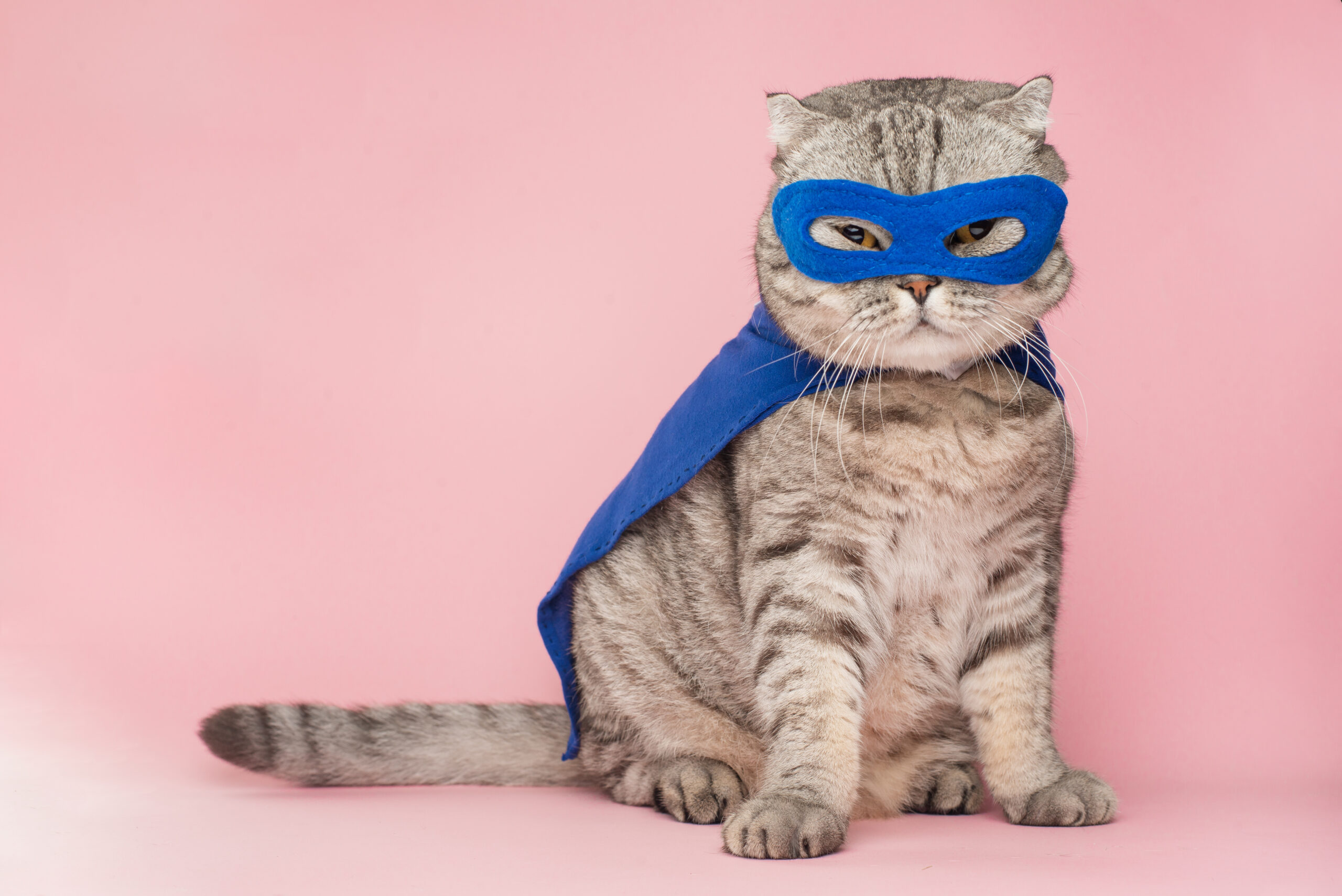
People often describe themselves as either “cat people” or “dog people,” and a lot of that comes down to how each animal shows affection. Dogs tend to love loudly. Cats typically love quietly (although some breeds such as siamese can be quite vocal). That difference isn’t a personality flaw; it’s biology. Cats evolved as independent hunters, not pack animals, which means their affection is selective, intentional, and rarely on command.
Think of your cat as the wallflower at a dance party. They’re not uninterested. They’re watching. Waiting. And when they choose to step onto the floor, it’s because they truly want to be there. Once you understand that, you’ll start to see your cat’s behavior differently — not as distant or aloof, but as a series of small, deliberate acts of trust.
Cats Are Not Small Dogs
Cats are naturally solitary hunters rather than pack animals. This fact shapes everything from how they eat to how they form bonds. Cats are obligate carnivores, have unique anatomy and physiology, and maintain social relationships differently than other animals.
Treating cats like small dogs will lead to mismatched care — whether that shows up in their diet, their environment, or how we interact with them day to day.
Cats Establish the Terms
Affection should happen on the cat’s terms, not yours. Not every cat is a lap cat. Some cats show love by sitting near you, not on you.
Cat-initiated contact is always more meaningful and productive than forced contact, and you’ll likely experience far fewer scratches as a result.
Not all cats show affection the same way, either. While some cats will let you pet them as long as you wish, other cats may only be able to enjoy 3-4 pets before becoming overstimulated. Be cautious not to overstimulate.
A Note on Overstimulation
Cats have extremely sensitive nerve endings in their skin, so repeated petting can overstimulate their sensory system. A sudden swat or nip is often a neurological way of saying “that’s enough,” not aggression.
Common early signs of overstimulation include:
- Tail flicking
- Ear flattening
- Skin twitching
- Dilated pupils
- Sudden body stiffness
These are all signals that your cat is asking for a break before play turns into swats or bites.
Overstimulation is not to be confused with play aggression. Play aggression can be a misleading term. Play aggression is rooted in play and trust behavior, not hostility.
Your cat may dabble in gentle “play biting” and bunny-kicking with claws retracted. This is a form of social play behavior that cats reserve for bonded companions such as littermates, mothers, and trusted social partners. It’s actually a sign of trust, not aggression.
Cats and Kids
Small children and toddlers should always be supervised when interacting with a cat. Make sure that any younger people handling the cat understand that caution is key. One of the most important initial lessons you can teach a child is not to use their hand as a toy to play with a cat, which will result in bites and scratches. If your cat gets overstimulated after 3-4 pets/strokes, make sure children interacting with the cat understand this as well.
Discourage any forceful petting, hair, or whisker pulling as this will aggravate even the most easygoing cats.
When you begin to notice your cat’s social cues, something shifts. Their behavior stops feeling random or distant and starts feeling intentional. You see the pauses, the glances, the slow blinks, the quiet choices to sit nearby.
Those small moments are how cats say, “You matter to me.” Not loudly. Not constantly. But consistently.
The Complex Love Languages of Cats
Cats often show affection in quiet, practical ways – including:
- Hiding toys or treats in your room (or even in your slippers)
- Rubbing against you
Sleeping near you (typically not on you) - Grooming you
- Following you room to room*
*Your cat isn’t being hypocritical when they follow you into the bathroom; they’re being protective. Cats instinctively understand vulnerability. A closed, quiet room is a place where they feel it most, so that’s their way of standing guard.
When your cat waits outside the shower or sits beside the sink, they’re not invading your privacy. It’s their way of saying, “I’ve got your back.” Feline behaviorists describe this as Sentinel Behavior – a quiet form of social protection seen between bonded cats.
When your cat rubs against you, there’s a reason for that, too. This means your cat is “marking you” with their scent. It’s their way of saying “You’re mine.” It’s basically a love letter.
Why Cats Love Quietly (And Why That’s Actually Special)
Cats aren’t performative when it comes to their affection. They don’t need constant reinforcement and affection; they don’t need approval.
When it comes to cats, love is shown through consistency, trust, and presence. Just because affection is loud doesn’t mean it is loyal. Cats don’t love everyone, and that’s exactly why it matters when they choose you. Their affection isn’t loud, flashy, or constant. It’s quiet, consistent, and deeply personal.
At Dr. Elsey’s, we believe that understanding cats as cats (not as small dogs) is the foundation of better care, better products, and stronger bonds. Every solution we create is designed to support the everyday behaviors that make your relationship with your cat special.
Because when a cat chooses you, it means something.