
Feline Diabetes: Everything You Need to Know
Veterinarians are seeing more diabetic cats today than ever before, and the trend continues to climb. What makes this especially frustrating is how preventable many of these cases are when cats are fed and managed according to their biology.
Feline diabetes is a serious but manageable condition. With early detection, the right nutrition, and consistent veterinary care, many cats can live long and healthy lives. Here’s what every cat parent should know to help prevent, detect, and manage the disease.
Table of Contents
What is Feline Diabetes?
Similar to Type 2 diabetes in humans, feline diabetes occurs when a cat’s pancreas can no longer produce sufficient insulin due to beta-cell exhaustion, or the body’s cells stop responding to insulin normally – a condition known as insulin resistance. In both cases, sugar remains in the bloodstream instead of entering cells for energy. As a result, blood sugar rises while cells starve.
Cats also take much longer than humans to return to normal blood glucose levels after a carbohydrate meal. While humans and other omnivores typically see glucose return to baseline within 2–3 hours, cats can remain elevated for up to 18 hours. This prolonged hyperglycemia and hyperinsulinemia place continuous stress on tissues and contribute to cellular damage.
Sustained high glucose and insulin levels also strain the pancreas. Over time, this metabolic pressure leads to beta-cell stress and, ultimately, loss of beta-cell function.
In a 2020 study, Zini et al. found that diabetic cats exhibited elevated oxidative damage in red blood cells, confirming that chronic high blood sugar places measurable strain on feline tissues, including increased risk of kidney damage, similar to what is seen in humans. Diabetes, in many ways, is what happens when a cat’s metabolic system is pushed past its design limits.
Conversely, after a high-protein meal, a cat’s plasma glucose either stays the same or gradually returns to normal levels within 4 hours. This means cats do not experience prolonged glucose elevations after high-protein meals.
Unlike humans and dogs, cats have a continuous need for dietary protein. Their metabolism is designed to rely on protein as a primary energy source through a process called gluconeogenesis, where glucose is produced from protein in the liver. Importantly, this process does not “shut off” when carbohydrates are available. When dietary protein is inadequate, cats will begin breaking down their own muscle tissue to meet energy demands – a process that becomes especially problematic with age.
Common Symptoms of Feline Diabetes
Common feline diabetes symptoms include:
● Increased thirst
● Increased urination
● Inexplicable change in appetite
● Weight loss despite good appetite
● Lethargy
The earlier a diagnosis can be made, the better. If your cat exhibits any of the above symptoms, it’s important to schedule a consultation with your veterinarian. Left untreated, feline diabetes can lead to severe or even fatal consequences. However, a diabetes diagnosis, although alarming, is not something you and your cat should feel defeated over.
Early Warning Signs
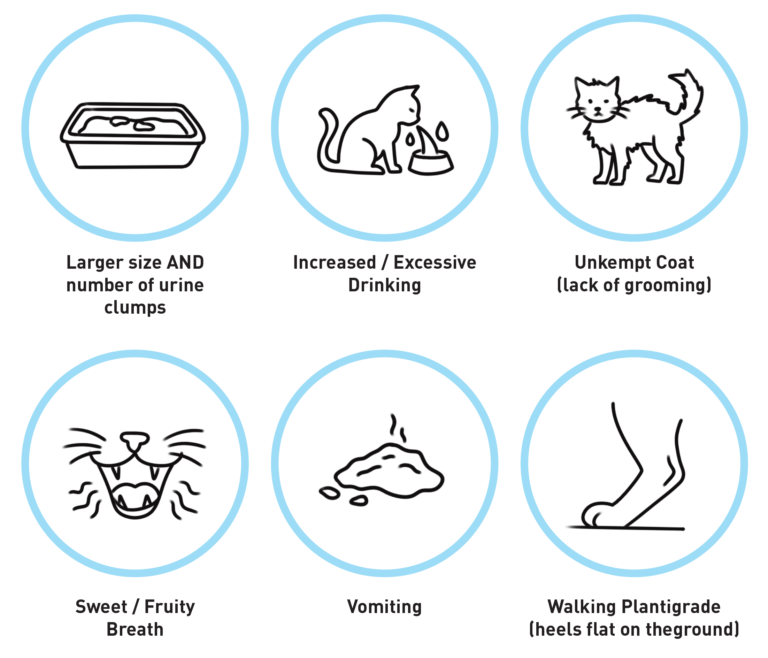
Diabetes detection isn’t just about thirst/urination. Early indicators cat parents tend to miss include:
● Larger size and number of urine clumps
● Increased/excessive drinking
● Unkempt coat
● Sweet/fruity breath
● Vomiting
● Walking plantigrade (most often shows up as weight bearing on the hocks of the hind limbs)
If your cat exhibits one or multiple of these early indicators, it’s important to schedule an examination with your vet.
What to Do After Diagnosis
A diabetes diagnosis can feel overwhelming at first, but most cats respond well when treatment begins early and remains consistent. Your veterinarian will outline a plan tailored to your cat’s needs, including what to feed, feeding quantity, monitoring blood glucose, urine glucose, insulin injections (twice a day), and weight.
Learning proper insulin administration is an essential step. Your veterinary team can show you how to give injections safely and comfortably, as well as how to recognize signs of hypoglycemia, which typically manifests itself as weakness/lethargy. These injections are typically well-tolerated. Many cat parents also find at-home blood glucose and urine glucose testing helpful for tracking progress between clinic visits.
Routine follow-up is critical. Regular weigh-ins, periodic blood tests, and physical exams allow your veterinarian to adjust insulin doses and ensure the treatment plan is working. A biologically appropriate, low-carbohydrate diet supports the medical therapy by reducing stress on the pancreas and helping stabilize blood sugar levels.
While managing diabetes takes commitment, your effort will directly improve your cat’s quality of life. With consistent care, many diabetic cats live long, healthy, and active lives.
What Causes Feline Diabetes?
Feline diabetes is multifactorial. Below are what we understand to be the key contributing factors:
1.) Environmental / Dietary Factors
High-carbohydrate diets (especially dry kibble built on grains, heavy plant ingredients and starches) have long been associated with feline obesity and impaired glucose control.
A foundational study by Zoran (2007) explains the metabolic mismatch clearly:
“While cats can use carbohydrates (CHO) as a source of metabolic energy, they have no requirement for them (nor do dogs for that matter), and their metabolic machinery is not ideally suited to use them in large doses.”
Debra L. Zoran, Journal of Feline Medicine and Surgery
Cats lack the metabolic machinery to process carbohydrates and plant matter in large amounts. When exposed repeatedly to high-carb diets, cats experience:
- Chronic inflammation (a known risk factor for long-term kidney problems)
- Beta-cell exhaustion/death (leads to reduced/diminished insulin production)
These metabolic pressures create the foundation for feline diabetes.
How Carbohydrates Drive Fat Gain & Insulin Issues
Carbohydrate-heavy meals set off rapid increases in blood glucose, which forces the pancreas to release insulin. Repeat this cycle day after day and you get the following:
- Insulin remains elevated (glucose stays high for an extended period of time)
- Fat storage increases as excess glucose is shuttled into fat cells, causing them to enlarge
- Cells respond less to insulin (insulin resistance)
- Chronic hyperglycemia promotes inflammation, increasing oxidative stress and metabolic strain throughout the body
What we’re talking about here is a self-reinforcing loop that promotes obesity and Type 2 diabetes.
Weight gain is a major risk factor for diabetes. Overweight cats are many times more likely to develop diabetes than cats at an ideal weight.
Indoor lifestyles add another layer of risk. Most cats don’t have to work for their food anymore, rarely engaging in hunting or high-energy play. This reduces caloric expenditure throughout the day, increasing the probability of weight gain. Using food puzzle toys can help alleviate this issue and reduce boredom.
Portion Size and Why it Matters
Carbohydrates strongly promote weight gain in cats via prolonged elevations of blood glucose. However, even on a high-protein diet, some cats will over-consume calories – meaning appropriate portion control is still essential, even when feeding a high-animal-based protein diet.
A collar-activated feeder for each cat in the household can be a great tool to reduce overeating and encourage portion control.
To minimize diabetes risk:
- Feed a low-carbohydrate, high-animal-based diet
- Control calories and portion size
- Encourage daily play that mimics natural hunting behavior
- Maintain a healthy body weight (muscle mass is critical for burning calories and fat)
Food quality + appropriate quantity = best protection.
2.) Biological Predispositions
Certain breeds of cats have demonstrated susceptibility to feline diabetes. Breeds with higher reported risk include:
- Burmese
- Siamese
- Related crossbreeds
Other risk factors:
- Middle-aged to senior cats (7+ years)
- Male cats (who show a slightly higher predisposition than females)
- Family history of endocrine disorders
- Whether or not a cat is neutered (neutered cats require 25%-30% fewer calories – both males and females)
3.) Drugs/Medications
Certain medications (such as corticosteroids) can also reduce a cat’s responsiveness to insulin. While these drugs are sometimes necessary in a medical sense, prolonged or repeated use increases the likelihood of developing diabetes.
Treatment Options for Feline Diabetes
Diabetes in cats is highly treatable, and early intervention dramatically improves outcomes. Current treatment options for feline diabetes involve insulin injections. While most cats start with insulin therapy, veterinary medicine is seeing meaningful progress in new oral options.
Emerging Treatment Options
The most common insulin therapy formulations – glargine (long-acting) and Vetsulin® (intermediate-acting) – help regulate blood sugar when paired with consistent feeding routines. Newer options like SGLT-2 inhibitors are gaining attention. These oral medications lower blood sugar by allowing glucose to exit through urine rather than relying solely on insulin. These medications may be appropriate in certain cases; your veterinarian can help you determine whether they are a good fit.
Regardless of treatment type, close monitoring is essential. Cats should be weighed frequently. Insulin should only be given when cats are eating normally to prevent dangerous drops in blood sugar (hypoglycemia). The best approach combines veterinary-guided therapy with a low-carbohydrate, high-protein diet to help restore natural metabolic balance.
Possibility of Remission
According to Veterinary Medicine: Research and Reports, “The highest remission rates in diabetic cats (>80%) are reported using a very low-carbohydrate diet (<6% carbohydrate) in combination with protocols aimed at achieving normal or near-normal blood glucose concentrations,” (Vet Med (Auckl). 2018 Jun 19;9:33–42).
Low-carbohydrate diets help reduce the metabolic workload on the pancreas. By lowering post-meal glucose spikes, the demand for insulin drops, beta-cell stress decreases, and insulin sensitivity can begin to improve. This is why some cats, especially those diagnosed early, can return to normal or near-normal glucose control on a low-carb diet, which reduces the amount of time glucose is elevated.
Remission is not guaranteed, but nutrition plays a direct role in giving diabetic cats their best chance at long-term metabolic stability.
Feline Diets By the Numbers
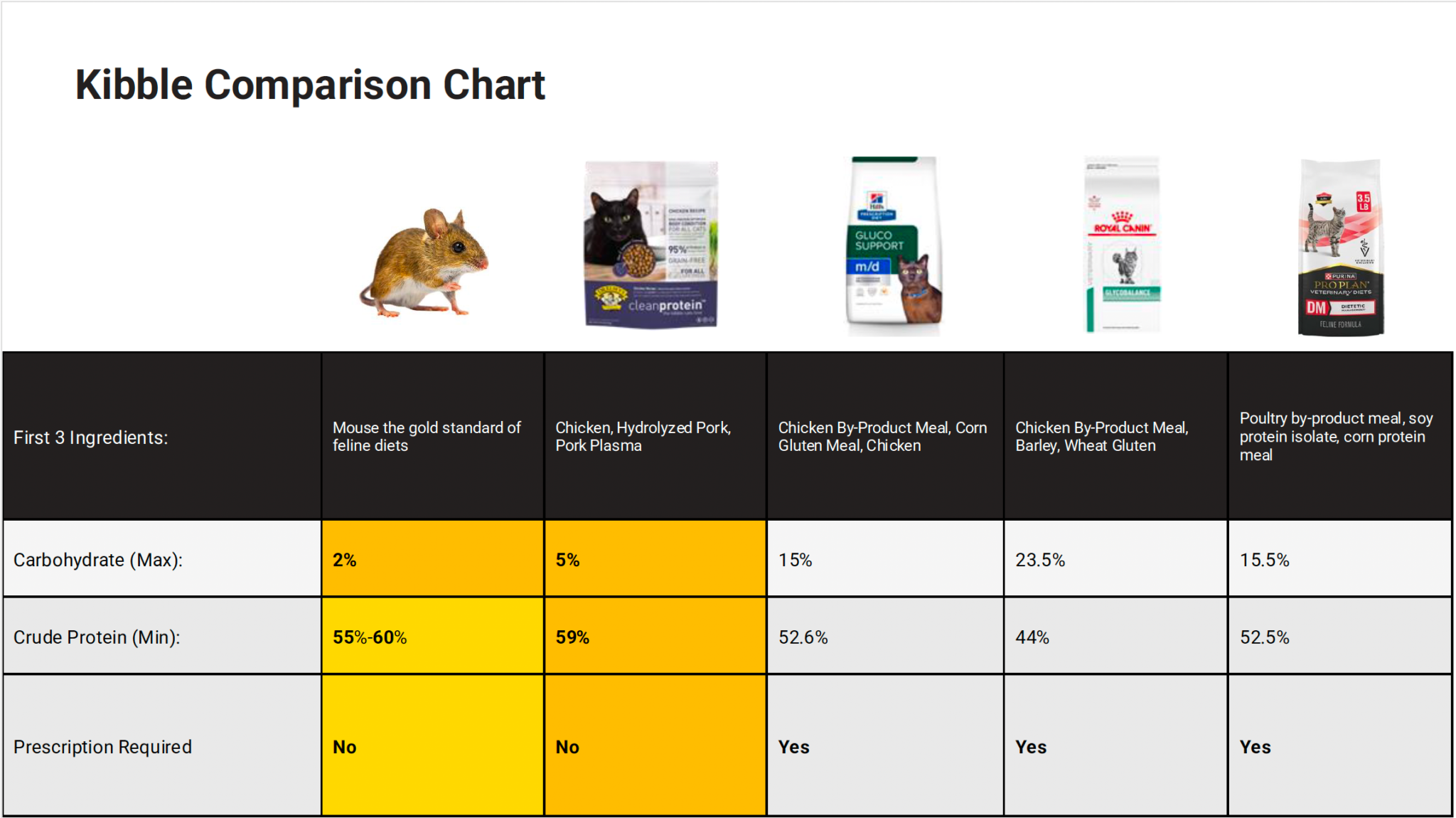
Most diabetic cats experience the best results with insulin injections alongside switching to a biologically appropriate diet. While new SGLT-2 inhibitors are increasingly used, these treatments are considerably more costly. In conjunction with your treatment protocol, it’s important to schedule regular veterinary visits to monitor the condition and help your cat maintain a healthy weight.
Understanding why low-carbohydrate diets work requires a look at how a cat’s metabolism responds to different nutrients.
How a Biologically-Appropriate Diet Supports Diabetic Cats
Feeding a low-carbohydrate, high-animal-protein diet doesn’t just reduce carbs, it changes how a diabetic cat’s entire metabolic system functions. Take a closer look at the mechanisms at work:
- Lower post-meal glucose spikes
With very few dietary carbohydrates, blood sugar rises more slowly and to a lesser degree after meals.
- Reduced insulin demand on the pancreas
Lower glucose elevation means the pancreas doesn’t have to release as much insulin, easing the workload on stressed beta cells.
- Improved insulin sensitivity
When insulin levels stop surging, the body’s cells often begin responding to insulin more effectively.
- Decreased risk of hypoglycemia
Stable, predictable glucose curves mean fewer sharp drops — especially important for cats receiving insulin.
- Reduced systemic inflammation
High-carb diets contribute to chronic inflammation; lowering carbs helps decrease inflammatory signaling.
- More consistent energy from protein and fat
Cats naturally rely on gluconeogenesis (creating glucose from protein) for stable energy, so a high-protein diet supports their biology rather than fighting it.
- Potential support for remission
By reducing beta-cell stress and stabilizing blood sugar, nutrition creates the conditions under which remission becomes more achievable.
Why Mirror a Cat’s Natural Diet?
Cats are obligate carnivores – they are biologically designed to process protein and fat as primary components of their diet, not carbohydrates or plant-based proteins. When it comes to protein, cats have high requirements for maintenance, energy, and gluconeogenesis.
High-protein, low-carb diets align more closely with feline evolutionary biology. A natural prey animal for a cat (for example, a mouse) is around 55%-60% protein, 27%-30% fat, and usually around 1%-2% carbohydrate.
While cats need certain nutrients (amino acids, vitamins, fats) to thrive, carbohydrates are not among them. According to a recent review, “dogs and cats do not have a nutritional requirement for carbohydrates,” (Kayser et al., 2024).
In practical terms, that means a cat’s body can produce all the glucose its tissues need from protein and fat, rather than relying on dietary carbs. This supports the idea that a cat’s metabolism is built for animal-based protein and fat and that it differs so sharply from the high-carbohydrate values found in many mainstream pet foods.
Are Wild Cats “Healthier”?
It’s important to give this argument a fair shake. Are wild cats out there living healthier lives than indoor cats? Not exactly. Sure, there aren’t many obese cats out in the wild. And, if you ever meet a cat with feline diabetes in the wild, we’d be surprised to hear about it.
There are pros and cons to both situations – cats in the wild obtain biologically-appropriate food. They are less likely to be obese and may have reduced risk of certain metabolic conditions such as feline diabetes. Conversely, they aren’t getting consistent feedings in the wild, which leads to feast/famine cycles.
The average lifespan of a cat in the wild is something like 5-10 years while an indoor cat is more likely to live 15-20 years. Wild cats have to worry about predators, vehicles, territorial squabbles, parasites, infections, and environmental toxins. House cats, meanwhile, just need their humans to make good choices on their behalf.
So, we’ll admit that while a natural diet aligns with feline biology, wild cats aren’t exactly “perfectly safe and healthy,” either.
Moving Forward: Practical Applications
Understanding feline diabetes, its risk factors and a cat’s natural biology help us make better choices for our cats. The key is bridging the gap between what cats evolved to eat and what fits safely into modern pet care.
Our goal is to combine the benefits of natural nutrition with indoor safety and longevity. Consider cleanprotein™ as part of a comprehensive approach to feline wellness.
FAQ
Can feline diabetes be reversed?
In some cases, yes. While remission is not guaranteed, studies have reported remission rates exceeding 80% when diabetic cats are treated early with insulin therapy and fed a very low-carbohydrate diet. The earlier diabetes is identified and managed, the better the chances of improving long-term glucose control.
What should a diabetic cat eat?
Most veterinarians recommend a diet that is high in animal-based protein and low in carbohydrates. Cats are obligate carnivores and do not have a biological requirement for dietary carbohydrates. The goal is to reduce post-meal glucose spikes while supporting healthy body weight and muscle mass.
Is wet food better than dry food for diabetic cats?
Wet food often contains fewer carbohydrates and provides additional moisture, which can be beneficial for many cats. However, the most important factor is the overall nutritional profile. Some low-carbohydrate dry foods may also be appropriate as part of a diabetes management plan. Work with your veterinarian to determine the best approach for your individual cat.
Why is maintaining muscle mass important for diabetic cats?
Muscle tissue plays an important role in glucose metabolism and calorie utilization. Cats naturally rely on protein to meet their energy needs, and inadequate protein intake can contribute to muscle loss over time. Preserving lean muscle mass supports overall metabolic health and can be an important part of diabetes management.
Do diabetic cats need protein from muscle meat only?
No. Cats require amino acids and nutrients that naturally occur throughout animal tissues. In the wild, cats consume far more than skeletal muscle alone. A prey animal includes organs, connective tissues, blood, and other nutrient-rich components. The nutritional value of a food depends on the quality, digestibility, and amino acid profile of its ingredients rather than whether every protein source comes exclusively from muscle meat.
Are specialty litters necessary?What is animal plasma, and why is it used in some cat foods?
Animal plasma is a highly digestible animal-derived protein ingredient that contains amino acids, peptides, and naturally occurring proteins. It is not a carbohydrate source and is used in some pet foods to help support protein content, palatability, and formulation goals. Like any ingredient, it should be evaluated within the context of the complete diet rather than in isolation.
Every cat’s health history and nutritional needs are unique. This article is intended as general educational information and is not a substitute for veterinary care. If your cat has diabetes or another medical condition, work closely with your veterinarian before making changes to diet, medications, or treatment protocols.