

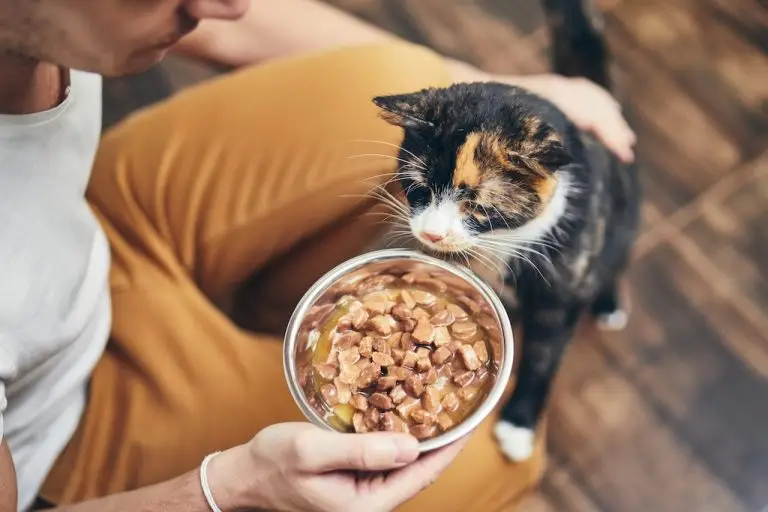
Humans have repeatedly allowed convenience, presentation, novelty and palatability to compete with nutritional function in our own food system. Now many of those same consumer impulses are finding their way into the cat’s bowl.
For decades, commercial pet food has been grounded in a straightforward promise: one food can provide complete and balanced nutrition for the pets we love.
Walk through the pet aisle today and you will find an expanding assortment of sauces, toppers and flavor enhancers. A bowl of kibble apparently needs dressing up before it feels complete. Anything less than a restaurant-style presentation can begin to seem inadequate.
The real question is: Who needs it to feel like a meal?
Loving pets like family is emotionally genuine and true to life. That sentiment is also commercially valuable.
Consider the growth of fresh pet food. According to a 2025 Reuters report, General Mills expects the American fresh pet food category to grow from approximately $3 billion to $10 billion over the next decade. The president of the company’s North American pet business attributed that growth directly to humanization and demand for food that looks, smells and feels like something made for people.
Perhaps no term captures the appeal of humanization more directly than “human-grade.” It suggests a food good enough for us and, by implication, better for the cats we consider family.
The term is not meaningless. Under guidelines established by the Association of American Feed Control Officials, a human-grade claim applies to the product as a whole and requires its ingredients and finished product to be handled according to applicable human-food standards. But the claim primarily describes the ingredients and standards under which a food is handled and produced. It does not establish that the food offers superior nutrition or is especially well suited to feline biology.
Human-grade food still needs to be evaluated as cat food.
Before bringing human food culture into the cat’s bowl, it is worth considering how reliably that culture has guided our own choices.
Convenience, palatability, variety, presentation and health-focused language all influence what people choose to eat. None of these qualities is inherently negative. The problem arises when they become substitutes for understanding how a food is formulated and what it does inside the body.
The comparison here is not between specific human foods and specific pet foods. It is between the consumer instincts used to judge them. Our own food culture has repeatedly shown that convenience, presentation and perceived healthfulness can make a product feel nutritionally sound without necessarily telling us how it functions inside the body.
The stakes give us reason to examine those judgments carefully. According to 2026 data from the Centers for Disease Control and Prevention, approximately 40.1 million Americans have diabetes, and 37 million adults have chronic kidney disease. These conditions frequently overlap, with an estimated 38% of adults with diabetes also living with CKD.
Both diseases are complex and cannot be attributed to any single food or product category. However, a 2023 analysis of three large prospective U.S. cohort studies associated greater consumption of ultra-processed foods with an increased risk of type 2 diabetes. A 2025 systematic review and meta-analysis published in Nutrients reported an association between ultra-processed food consumption and CKD risk as well.
We are still reckoning with what happens when the performance of food becomes difficult to separate from its nutritional function. That does not make human instincts about food useless, but it does make them insufficient. We should be cautious about applying those same instincts to another species whose biological needs are markedly different from our own.
A cat is not a small dog, much less a small human. Cats evolved to obtain their nutrition primarily from animal tissue, and their physiology still reflects that history.
As obligate carnivores, cats depend on nutrients naturally found in animal tissue and maintain a comparatively high requirement for dietary protein. Cats can digest and use carbohydrates, but neither the National Research Council nor the Association of American Feed Control Officials establishes a minimum dietary requirement for them.
Cats also process carbohydrate-rich meals differently than people do. In one study of healthy cats fed a moderate-carbohydrate meal, blood glucose took a median of approximately 12 hours to return to baseline. In comparison, glucose in people with normal glucose tolerance typically returns to premeal levels within two to three hours. Other research has found that high-carbohydrate diets produce higher post-meal glucose concentrations in cats than diets higher in protein or fat.
The distinction is not that cats are incapable of consuming carbohydrates, but that their nutritional needs and metabolism were shaped by a naturally protein-rich diet containing very little carbohydrate.
Hydration presents another important difference. Cats evolved to obtain much of their water through prey and may not fully compensate for a low-moisture diet by drinking more. Total water intake should therefore be considered when evaluating a cat’s diet rather than judging the food by format alone.
The point is not that every sauce or topper is inherently bad. It is that a cat has no concept of gourmet presentation, aspirational sourcing language or cooking-show aesthetics. A cat responds to aroma, texture and temperature, but what ultimately matters is the food’s nutrient composition and how it functions inside the cat’s body.
Phosphorus offers another example of why feline nutrition cannot be evaluated by quantity alone. Cats require phosphorus, but the amount, source and balance of that phosphorus play an important role.
Research indicates that highly soluble artificial phosphate salts used as food additives are absorbed differently than phosphorus naturally present in animal-derived ingredients. In feeding studies, added artificial phosphates produced sharper post-meal increases in circulating phosphorus and increased the amount of phosphorus the kidneys had to excrete. Experimental diets containing excessive amounts of highly soluble artificial phosphorus have also produced changes in kidney-function markers in healthy cats, particularly when calcium and phosphorus were poorly balanced.
Research into the long-term implications is ongoing. For now, these findings support a measured approach centered on low and controlled phosphorus, careful calcium-to-phosphorus balance and greater attention to the source of phosphorus in a cat’s diet.
A product can resemble a home-cooked meal without offering superior nutrition. Kibble can look ordinary and still be intelligently formulated. Wet food can provide useful moisture without imitating human cuisine. Fresh food can be nutritionally sound, but “fresh” alone is not proof of completeness, safety or suitability.
What matters to a cat is whether a food provides complete and balanced nutrition for the appropriate life stage, where its protein comes from, how much carbohydrate it contains and whether the cat’s overall diet supports adequate hydration.
As cat parents, we should ask what purpose each ingredient serves and what supplemental products contribute to the diet. Sauces, toppers and treats may add flavor or variety, but when used too freely, they can contribute calories and nutrients that alter the balance of the primary food.
The Association of American Feed Control Officials (AAFCO) notes that treats and chews are generally not formulated to provide complete and balanced nutrition. When these products make up too much of a cat’s daily intake, they can disrupt an otherwise balanced diet and contribute unnecessary calories. The same scrutiny should be applied to any product added to the bowl.
The real test isn’t whether a food looks like something you’d want to eat. It’s whether it would still be worth feeding if it didn’t.
Humanization has improved cats’ lives in meaningful ways. Cats are increasingly recognized as family members whose physical health, emotional security and environmental needs deserve serious attention. That progress is worth protecting.
The problem begins when care becomes projection. Loving cats does not require us to remake them in our image or measure their food by how closely it resembles our own. The consequences of our own food culture give us reason enough to question that approach. The best care comes from recognizing cats for what they are and respecting the biology that makes them different from us.
Humanize the care. Question the marketing. Look beyond the performance of food and consider what truly serves the cat eating it.
Love your cat like family. Feed them like a cat.
What does humanization mean in pet food?
Pet food humanization refers to the practice of developing and marketing pet food around qualities associated with human food. These may include recognizable ingredients, culinary presentation, restaurant-inspired recipes, premium sourcing language and formats that resemble meals prepared for people.
What does “human-grade” actually mean for cat food?
Under guidelines established by the Association of American Feed Control Officials, a human-grade claim applies to the product as a whole. Its ingredients and finished product must be stored, handled, processed and transported according to applicable human-food standards. The term primarily describes production and handling requirements, not the food’s nutritional suitability for cats.
Is human-grade cat food nutritionally better?
Not necessarily. Human-grade food may meet specific sourcing, handling and processing standards, but the designation does not independently establish superior nutrition. A human-grade food must still be evaluated according to its nutritional adequacy, protein sources, carbohydrate content, moisture contribution and suitability for the cat’s life stage.
What makes cat food complete and balanced?
A complete and balanced claim means the food is formulated to provide all essential nutrients in the appropriate proportions for a specified feline life stage. The claim must be supported through established AAFCO nutrient profiles, feeding trials or approved product-family criteria. Look for the nutritional adequacy statement on the package to determine whether a food is intended as a primary diet.
Are cat food toppers and sauces unhealthy?
Not inherently. Toppers and sauces may add flavor, moisture or variety. However, many are intended only for supplemental feeding and are not complete and balanced. When used too freely, they can add unnecessary calories or displace nutrients from the cat’s primary food. Check the product’s nutritional adequacy statement and follow its feeding directions.